



Keeping it within the Family (of Nations)
Story


A wise man once said that “men are in the habit of speaking of the world, the state. As a matter of fact, the foundation of the world lies in the state, the foundation of the state lies in the family, and the foundation of the family lies in the individual.”
Mencius, the Chinese philosopher, is right. The wider world, like the state, is made up of families and individuals, and any lasting change begins with each of us individually. The choices we make and the actions we take reflect who we are and impact those closest to us first (e.g., our family), then the broader community around us. And while we may not be able to know or influence every single person that we cross paths with, we can do small things every day that make a difference.
And this is what I admire most about our volunteers – their individual and collective dedication and commitment to creating a better world. An example of this is featured in the following article, Entrepreneur program in Tanzania helps woman create thriving wine business. In the article, a volunteer sat down with a woman named Pendo to help her come up with new ideas to start her own business. I am happy that, in time, Pendo ran a successful wine business, producing wine from the leaves of Hibiscus flowers!
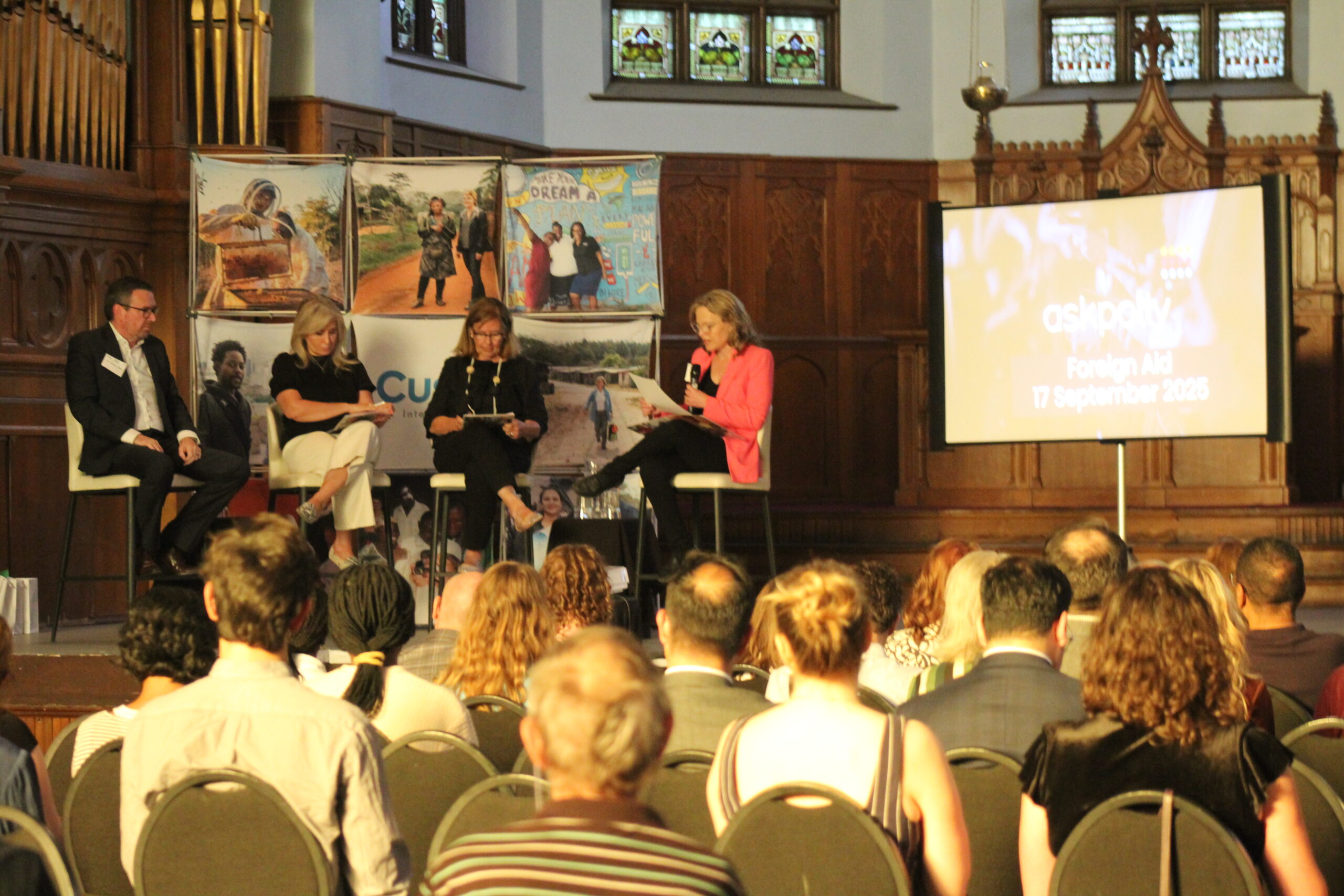
While this is indeed an exciting story, I am also inspired by my colleagues at Cuso, with whom I worked to host an event on Wednesday September 17. The event explored how Canada can best invest in the world and thus contribute to international cooperation and sustainable development.
We were delighted to have an excellent turnout at our event. Changemakers, policy influencers, diaspora leaders, and diplomats tuned in to a panel discussion moderated by Erin Kelly featuring Dr. Bessma Momani, the Honourable Christian Paradis, and Rosemary McCarney; they afterward engaged in meaningful conversations to advance collaboration, equity, and shared solutions.
During the panel discussion, panellists noted that, if Canada does not step up and invest financially in the family of nations, there will be a deep hole on the world stage. The panelists also noted that the hole is already quite deep due to the U.S. abandoning its traditional leadership role, embracing authoritarianism, and cutting funding for USAID and the World Health Organization. These drastic cuts in turn mean reduced job opportunities and fewer services available for the world’s most vulnerable people.
As such, many Canadians think there is a benefit to giving foreign aid. And, in comparison with the United States, the data reveals an interesting insight: while both countries experienced a sharp decline in April 2025, Canada recovered more quickly and now enjoys a higher share of Canadians who think positively of foreign aid. Meanwhile, negative sentiment remains in the U.S on this point.
Erin Kelly, the CEO of Advanced Symbolics and the creator of askPolly, said, “Canadians want to see Canada take a more active role in international development; that’s what Polly is saying.” This insight is grounded in data from a study askPolly conducted, which shows that, since 2020, Canadians have increasingly recognized an important reason why Canada should invest in foreign aid: to strengthen their country’s geopolitical influence.
Erin Kelly goes on to share that Canadians “see this as America owned that space before and they’re vacating that space. So, this is a chance for Canada and Canadians to be relevant again. Because people feel over the last 10 years we have been seen as a country that’s not doing its part. We’re a G7, G8 nation, but we’re not seen as a country that is taking leadership and that’s why we’re seeing that come up now, they’re seeing international aid as a peaceful way to be seen as taking leadership,” she said.
While her comment is very insightful, the panellists reminded the audience that extensive financial investment alone does not necessarily correlate with the degree of influence, because impact is a result of meaningful leadership on the world stage. Developing such leadership includes recognizing instances of silence and hypocrisy, even when dealing with allies and trading partners.
Nicolas Moyer, the CEO of Cuso International, also reminded those gathered that “we are not the ones that deliver change. Change comes from the community, and we need to work with our partners to elevate them. Everything that we produce as a program, that we design, that we engage with the community is really owned and supported by our local partners.”
Friends, this powerful quote reminds us that investing is but one way to make a difference worldwide. Forming meaningful partnerships, developing credible leadership, and empowering others to succeed are also important, and are what Cuso is all about. In these ways, Cuso helps Canada strengthen the family of nations in the international arena.